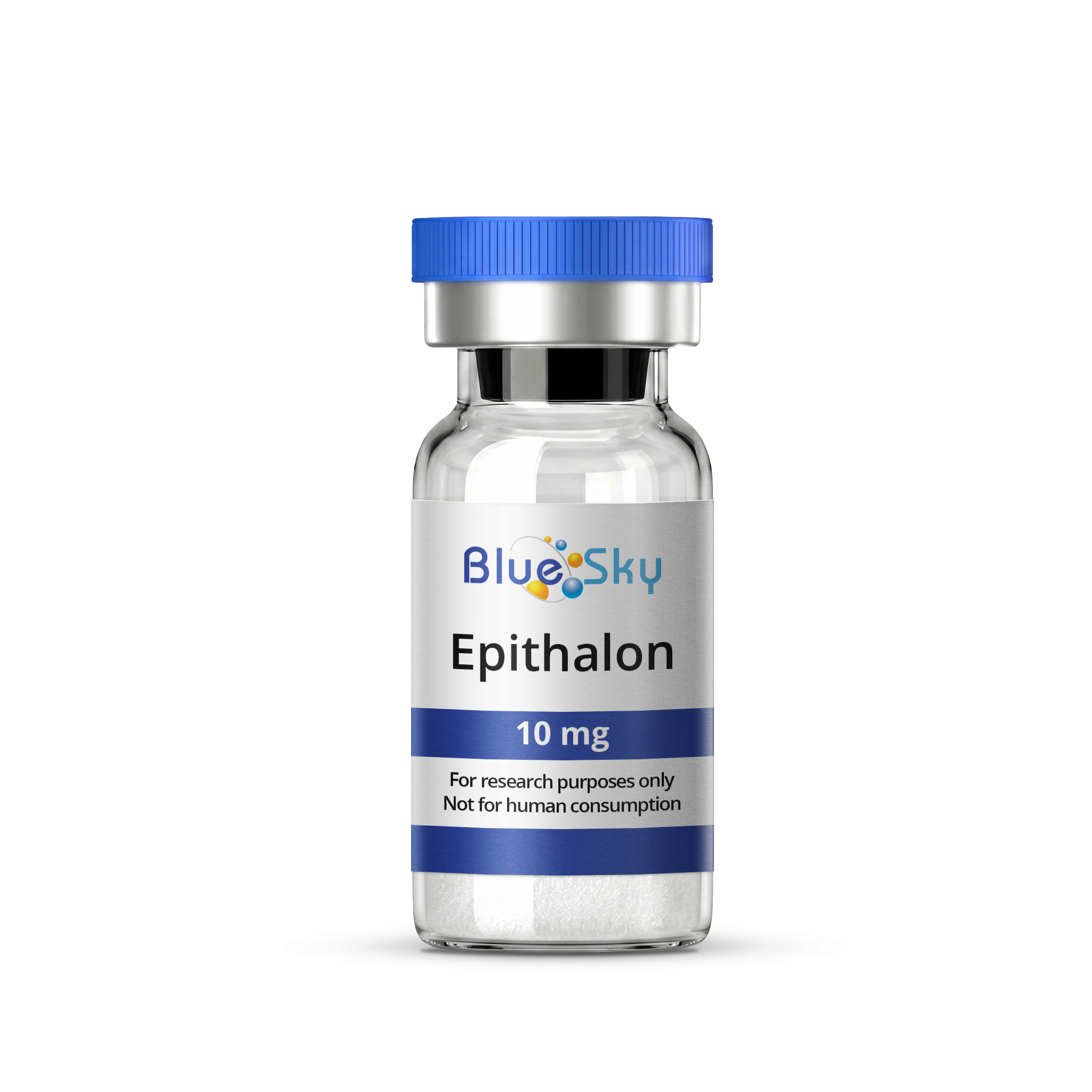
Epithalon Peptide 10mg

- Free Priority Shipping
- Orders over $75



Buy Epithalon 10mg:
| Unit Size | 10 mg/ vial |
| Unit Quantity | 1 vial |
| Purity (Mass Spectrometry and UV) | 97.60% |
| Sequence | H-Ala-Glu-Asp-Gly-OH |
| Molecular Formula | C14H22N4O9 |
| Appearance | lyophilized White Powder |
| Source | Chemical Synthesis |
| Storage | Epithalon 10mg is stable at room Temperature for 90 days, however it is best to store in a freezer below - 8c for any extended period of time. |
| Terms | The products we offer are intended for laboratory research use only. Please familiarize yourself with our terms of service prior to ordering. |
Epithalon Peptide 10mg
View Research Overview & References
Epithalon peptide is a synthetic peptide that mimics the naturally occurring protein epithalamin. Comprising four amino acids—alanine, glutamic acid, aspartic acid, and glycine—Epithalon (also known as epitalon) has a molecular mass of 390 g/mol. Known as the AEDG peptide, it is studied in vitro for its interactions with cell signaling and gene expression pathways.
Neurogenic Gene Expression Research in Human Stem Cells
In vitro studies using human gingival mesenchymal stem cells found that the AEDG peptide increased mRNA expression of several neurogenic differentiation markers, including Nestin, GAP43, β-Tubulin III, and Doublecortin, by 1.6 to 1.8-fold in this cell-based system.
Molecular modeling in the same study indicated that the AEDG peptide preferentially binds specific sites on histones H1/6 and H1/3, suggesting a possible epigenetic mechanism for this cell-based gene expression effect.3
Cellular Senescence Research in Human Somatic Cells
In vitro studies have examined Epithalon's effects on human fibroblast cell lines, with one study reporting that Epithalon-treated cells underwent a greater number of population doublings (over 44 passages) before reaching the Hayflick limit (the point at which cells enter senescence), compared to 34 passages for control cells.1
Separately, in vitro research examining human somatic cells found that Epithalon treatment was associated with cells exceeding what researchers describe as their typical division limit.2
Peptide Structure and the AEDG Tetrapeptide Motif
Epithalon belongs to a broader class of short peptide bioregulators studied for tissue-specific gene regulation, a research area built around the premise that very short peptide sequences—often just two to four amino acids—can bind selectively to specific DNA regions and influence gene expression.
Within this class, Epithalon's four-residue AEDG sequence is notable for its high proportion of acidic residues (glutamic acid and aspartic acid), a compositional feature researchers have linked to the peptide's studied interactions with histone proteins and chromatin structures in laboratory models.
Analytical Purity Verification
Because Epithalon is a short, highly polar tetrapeptide, reversed-phase high-performance liquid chromatography (HPLC) methods used for purity assessment often require careful optimization of mobile phase conditions to achieve adequate retention and resolution, given the peptide's high water solubility relative to longer or more hydrophobic research peptides.
Mass spectrometry is used alongside HPLC to confirm sequence identity and detect synthesis-related impurities.
Storage and Handling in the Laboratory Setting
Short peptides with a high proportion of polar and acidic residues, such as Epithalon, can be more hygroscopic than larger or more hydrophobic peptides, making moisture control during storage a relevant consideration in the laboratory setting.
Standard practice involves storing lyophilized Epithalon in a sealed container under sub-zero freezer conditions, away from moisture and light.
Comparative Research Context Among Short Peptide Bioregulators
Epithalon is frequently studied alongside other short peptide bioregulators developed within the same research program, including a three-residue peptide investigated for retinal and cerebral tissue research and a two-residue peptide studied in the context of immune tissue signaling.
Researchers comparing these short bioregulator peptides have focused on how differences in amino acid composition and sequence length correspond to reported tissue-selective activity in laboratory models, using Epithalon's pineal-associated research profile as a reference point within this broader comparative framework.
Product Information
Epithalon is supplied as a lyophilized white powder in 10 mg vials.
Important Notice
This peptide is intended for laboratory research use (in vitro) only. It is not approved for human use. These findings do not establish safety, efficacy, or suitability for any human application outside of controlled research.
References
1. Khavinson VK, Bondarev IE, Butyugov AA. Epithalon peptide induces telomerase activity and telomere elongation in human somatic cells. Bull Exp Biol Med. 2003 Jun;135(6):590-2.
2. Khavinson VK, Bondarev IE, Butyugov AA, Smirnova TD. Peptide promotes overcoming of the division limit in human somatic cells. Bull Exp Biol Med. 2004 May;137(5):503-6.
3. Khavinson V, Diomede F, Mironova E, Linkova N, Trofimova S, Trubiani O, Caputi S, Sinjari B. AEDG Peptide (Epitalon) Stimulates Gene Expression and Protein Synthesis during Neurogenesis: Possible Epigenetic Mechanism. Molecules. 2020 Jan 30;25(3):609.
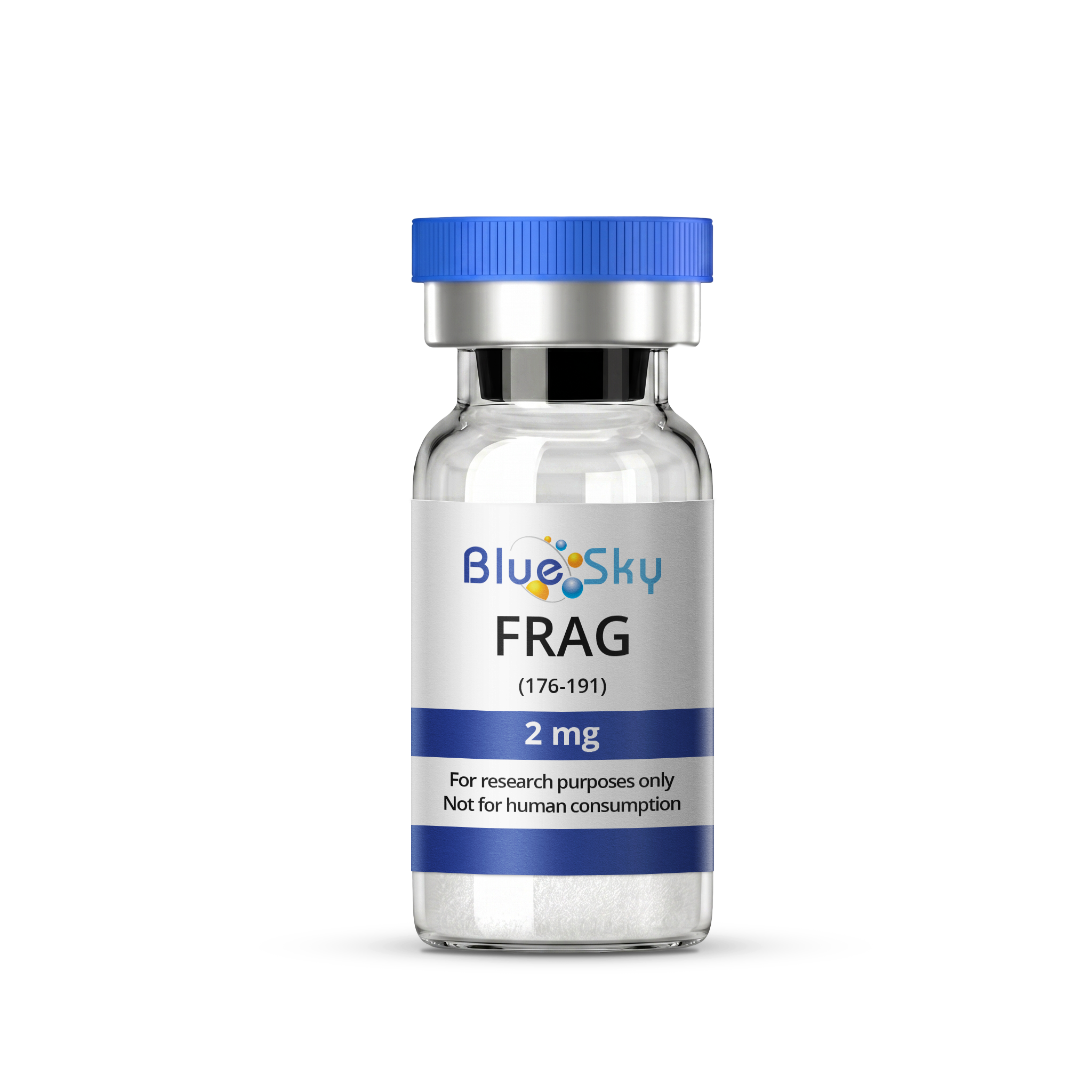 Buy FRAGMENT 176-191 2mg$63.95


 Login
Login